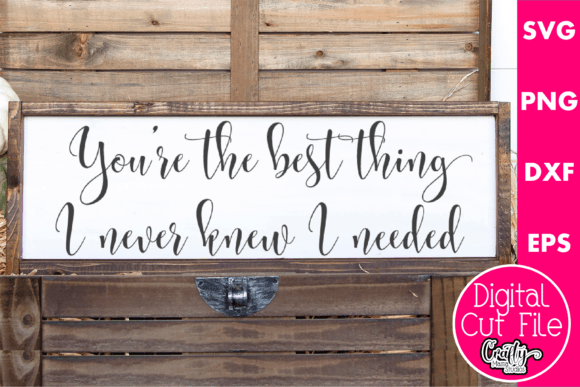
Reviewing "You Are the Best Thing I Never Knew"
As a designer who has spent countless hours digitizing and stitching out quotes, I approach every new machine embroidery design with a mix of optimism and skepticism. We have all seen those trendy text-based files that look perfect on a screen but turn into a tangled mess of thread breaks and puckering on fabric. Recently, I evaluated You Are the Best Thing I Never Knew to determine if it holds up under the needle. This isn’t just about aesthetics; it is about whether this embroidery file can survive the rigors of real-world production for a craft business.
First Impressions: Mood and Visual Personality
The phrase itself carries a heavy emotional weight. It is romantic, slightly nostalgic, and deeply personal. Visually, the layout of You Are the Best Thing I Never Knew suggests a balance between modern typography and classic sentiment. When I first loaded the preview, I looked for flow. Does the text stack logically? Is there enough breathing room between lines to prevent stitch overlap? For a quote of this length, spacing is critical. If the letters are too tight, the fill stitch areas will merge, creating a dense block of thread that lacks definition. From what I could assess, the design leans into a clean, readable structure, which is essential for maintaining the integrity of the message.
This type of Graphics asset fits naturally into the Crafts category because it bridges the gap between digital art and tactile home decor. It feels less like a loud statement piece and more like a whisper, making it ideal for intimate items rather than bold, attention-grabbing apparel.
The Real-World Test: A Custom Tote Bag Scenario
To truly judge this design, I imagined a specific client project: a custom canvas tote bag design for a wedding gift. The client wanted something understated yet meaningful. I visualized placing You Are the Best Thing I Never Knew on the lower right corner of a natural cotton tote. In this scenario, the design’s performance hinges on its adaptability. A tote bag undergoes significant stress—stretching, washing, and carrying heavy loads. If the stitch density is too high, the fabric will pucker around the text. If it is too low, the background fabric might show through, ruining the legibility.
I also considered how this would look on a sweatshirt embroidery project. Here, the texture of the fleece or French terry fabric plays a huge role. A design with fine details can get lost in the nap of the fabric. For You Are the Best Thing I Never Knew to work here, the lettering needs sufficient weight. I would recommend using a satins stitch border or a slightly bolder font variation if available in the file package to ensure the words pop against the textured background. This is where reviewing the actual digital embroidery file formats becomes crucial. Since the download includes SVG, EPS, DXF, and PNG, you have flexibility, but for embroidery, you need to ensure the digitized version (usually PES, DST, or JEF, depending on your machine) matches the vector clarity.
Navigating Fabric and Hoop Constraints
One of the biggest challenges with long quotes is hoop size. You Are the Best Thing I Never Knew is not a short phrase. It requires a medium to large hoop to maintain proper proportions without shrinking the text to an unreadable size. If you are working with a 4x4 inch hoop, this design likely won’t fit unless it is specifically scaled down, which risks losing detail in the smaller letters like 'e' or 'i'. Always check the dimensions before committing to a small hoop size.
Fabric choice is equally important. On thin or stretchy fabrics, such as jersey knits used for baby embroidery items, stabilization is non-negotiable. I would strongly advise using a cut-away stabilizer for any garment that will be washed frequently. For a one-time holiday embroidery project on a stable cotton pillow cover, a tear-away might suffice, but for a personalized gift meant to last, durability is key. Dark fabrics present another challenge. If the design relies on subtle shading or thin lines, it may disappear on black or navy material. In these cases, testing high-contrast thread colors is essential. A bright white or metallic gold thread could elevate the design, turning it from simple text into a luxurious accent.
Commercial Viability for Etsy Sellers
For Etsy sellers and small shop product creators, the appeal of You Are the Best Thing I Never Knew lies in its versatility. It fits seamlessly into niches like anniversary gifts, Valentine’s Day merchandise, or even self-care branding. However, commercial success depends on presentation. Using the included PNG formats for printable mockups can help you visualize the final product before you stitch a single thread. This saves time and materials, allowing you to create compelling listings that show the design on various items like aprons, caps, or embroidered patch blanks.
It is vital to remember that while the file includes SVG and EPS for cutting machines like Cricut, using it for embroidery requires a properly digitized file. If you are converting the SVG yourself, pay close attention to node placement and stitch types. A poor conversion can lead to excessive jump stitches and thread breaks. If you are purchasing a pre-digitized version, verify the stitch count and color stops. Always confirm licensing terms before selling finished products. Most designers allow commercial use of stitched items, but reselling the digital file itself is typically prohibited.
Practical Designer Notes for Best Results
Before you run this design on a client’s expensive garment, follow these practical steps:
- Test on Scrap Fabric: Always stitch out a test piece on the same fabric type and weight you plan to use for the final item. This reveals issues with tension and density.
- Check Thread Contrast: View your design in black and white. If the details disappear, you need higher contrast between the thread and the fabric.
- Inspect Small Details: Zoom in on the curves of the letters. Are there sharp angles that might cause thread bunching? Smooth these out in your software if necessary.
- Use Proper Stabilizer: Match your stabilizer to your fabric. Knits need cut-away; wovens can often use tear-away.
- Verify File Formats: Ensure you have the correct embroidery format for your machine. The provided SVG, EPS, DXF, and PNG are great for graphics and cutting, but double-check if a native embroidery file is included or if you need to digitize it yourself.
In conclusion, You Are the Best Thing I Never Knew is a promising asset for designers who value sentiment and clean typography. It requires thoughtful execution regarding hoop size, fabric stability, and thread choice, but when done correctly, it adds significant value to custom apparel and home decor items. It is a design that rewards patience and precision, resulting in a handmade product that feels both professional and deeply personal.