Reviewing the Human Rights Men's Rights SVG for Embroidery
As a designer who spends half my life digitizing and the other half stitching, I have learned that not every graphic translates well to thread. When I first pulled up the Human Rights Men s Rights Svg Design, my initial reaction was one of cautious curiosity. The description labels it as a men’s quote retro design, intended primarily for printable sublimation on t-shirts, hoodies, and onesies. However, in the world of Crafts and Graphics, lines blur. Many of us look beyond the intended medium to see if a vector file can serve as a robust foundation for a machine embroidery design. This review explores whether this specific asset holds up when moved from the printer to the needle.
First Impressions: Retro Boldness Meets Modern Message
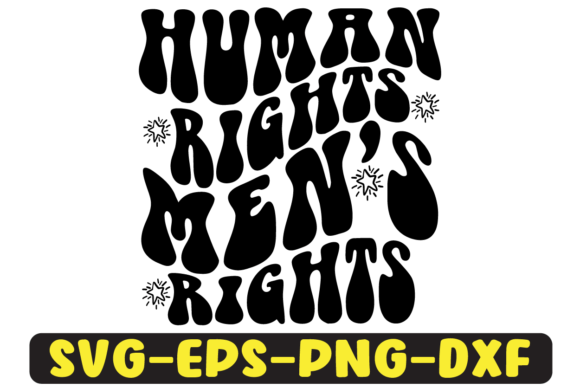
The visual personality of this design is undeniably bold. The retro aesthetic suggests thick, confident lines and a layout that prioritizes readability over intricate detail. For an embroidery practitioner, this is generally good news. Intricate, thin lines are the enemy of the hoop; they break easily and lack definition. The mood here is assertive yet nostalgic, fitting perfectly into the current trend of vintage-inspired activism wear. When I imagine this stitched out, I do not see delicate lacework. I see strong satin stitch borders or dense fill stitch blocks that command attention. It feels like a design meant for statement pieces rather than subtle accents.
The Real-World Test: From Screen to Sweatshirt
To truly evaluate this embroidery file, I mentally placed it on a few common substrates. My primary test case was a heavyweight cotton sweatshirt. This is a popular item for custom apparel shops and Etsy seller portfolios. On a dark charcoal hoodie, the retro typography would need high-contrast thread colors—perhaps a stark white or a vibrant mustard yellow—to pop against the fabric. The "retro" vibe pairs exceptionally well with the textured look of embroidery, adding a tactile depth that flat printing cannot achieve.
I also considered its application on a canvas tote bag design. Tote bags are staples for small shop product lines. Here, the durability of the stitch matters. If the design is converted correctly, the thick lettering can withstand the friction of daily use. However, because the original product description highlights it as a printable sublimation design, we must assume the vector paths are clean but not necessarily optimized for stitch density. This means the designer must do some heavy lifting during the digitizing phase to ensure the stitch density is appropriate for canvas, preventing puckering or thread breaks.
Navigating Fabric and Hoop Constraints
While the bold nature of the Human Rights Men s Rights Svg Design is an asset, it presents challenges on certain materials. If you are planning to use this on a baby onesie or lightweight jersey, caution is required. Heavy fill stitches on stretchy, thin fabric will cause distortion. In these cases, I would recommend treating the text as an applique design. By cutting the letters from a complementary fabric and stitching them down with a narrow satin border, you reduce the bulk and maintain the softness of the garment. This technique is crucial for baby embroidery where comfort is paramount.
Another critical consideration is the hoop size. Retro typography often relies on wide kerning or extended horizontal layouts. Before purchasing or committing to a project, you must measure the design’s dimensions against your machine’s maximum hoop capacity. If the phrase is too long for a standard 5x7 hoop, you may need to split the design or scale it down, which could compromise the legibility of smaller details. Always check the aspect ratio. Squashing a retro font to fit a hoop destroys the aesthetic integrity of the piece.
Commercial Viability and Brand Consistency
For creative entrepreneurs and craft business owners, the appeal of this design lies in its topical relevance. Men’s rights and broader human rights discussions are evergreen topics in social commentary apparel. Using this design in a commercial embroidery context can drive engagement, but it requires professional presentation. A sloppy stitch-out undermines the message. The clarity of the letters determines the perceived value of the finished product.
When creating printable mockup images for your online store, ensure that the digital representation matches the physical reality. If you are selling this as part of a personalized gift line, consider offering it on structured items like caps or patches. An embroidered patch allows you to stitch the design on a stable twill background before applying it to the final garment. This bypasses many of the issues related to fabric texture and stability, ensuring a crisp, professional look that builds customer trust.
Practical Designer Notes for Execution
If you decide to incorporate this digital embroidery file into your workflow, follow these practical steps to ensure success:
- Test on Scrap First: Never stitch directly on your final garment. Use a similar weight and weave of fabric to test tension and density.
- Stabilizer Selection: For knit fabrics like t-shirts and hoodies, use a cut-away stabilizer to provide lasting support. For woven totes, a tear-away may suffice, but cut-away is safer for dense designs.
- Check License Terms: The product description notes it is a printable product. You must verify if the license extends to commercial embroidery sales. Many SVG licenses are restricted to print-on-demand or personal use. Confirm this before listing items in your small shop.
- Digitizing Adjustments: Since this is originally a print design, you will likely need to adjust pull compensation and underlay stitches. Retro fonts often have sharp corners; ensure your digitizing software adds proper tie-ins to prevent unraveling.
- Contrast Check: View your design in black and white on your screen. If the details disappear in grayscale, they will likely get lost in thread. Simplify any overly complex junctions.
Final Verdict on Design Assets
The Human Rights Men s Rights Svg Design offers a strong visual foundation for those willing to put in the digitizing work. It is not a plug-and-play embroidery project right out of the box, given its origin as a sublimation graphic. However, for the experienced decorator, it represents a versatile asset. It fits naturally into categories of holiday embroidery gifts, activist apparel, and boutique branding. By respecting the limitations of the medium and choosing the right fabrics, you can transform this simple graphic into a high-value, tactile piece of art. Whether for a client’s custom hoodie or your own Etsy listings, the key lies in the execution. Treat the vector as a blueprint, not the final product, and you will find it serves your design assets library well.