Review: Good Times Good Food Good Friends SVG
As a designer who spends more time staring at stitch simulations than I care to admit, I have learned that not every vector file translates well to thread. We see thousands of designs marketed as "perfect for your projects," but the real test happens when you load the Good Times Good Food Good Friends SVG into your software and visualize it on actual fabric. This isn't just about having a cute phrase; it is about understanding how those curves, corners, and letterforms will behave under the needle. After evaluating this design for potential use in client work and personal craft business items, I want to share a practical perspective on where this graphic shines and where it requires careful handling.
First Impressions and Visual Personality
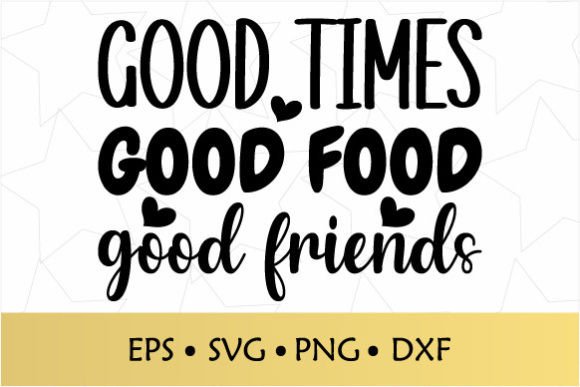
The immediate appeal of the Good Times Good Food Good Friends SVG lies in its warmth. It captures a specific mood—communal, cozy, and celebratory. Visually, the layout suggests a balanced composition that works well for lifestyle branding or home decor. When I first opened the file, I looked at the weight of the lines. For embroidery, line weight is everything. If the strokes are too thin, they disappear into the fabric texture. If they are too thick, they create bulk that feels stiff rather than soft.
This design appears to lean towards a friendly, approachable aesthetic. It does not scream for attention with overly complex details, which is often a blessing in machine embroidery. Complex details often lead to thread breaks or messy backing. The simplicity here suggests that it could perform reliably as a machine embroidery design if digitized correctly, or if the provided files are already optimized for stitching. However, since we are receiving vector formats like AI, EPS, and SVG, the responsibility for stitch generation often falls on the user or their digitizer. This means you have control, but you also have the workload.
Real-World Application: The Custom Tote Scenario
To truly evaluate a design, I mentally place it on a product. Let’s consider a canvas tote bag, a staple for any Etsy seller or small shop owner. Canvas has a distinct weave. A design like Good Times Good Food Good Friends SVG needs enough density to cover the weave without looking like a sparse sketch. If I were creating a tote bag design for a local farmers' market vendor, this phrase fits perfectly. It speaks to the experience of sharing meals and community.
In this scenario, I would likely opt for a combination of satin stitch for the borders or smaller text elements and a fill stitch for larger areas if the design allows. The key is contrast. On a natural beige canvas, a deep forest green or burnt orange thread would make the words pop. The visual clarity here is crucial. Customers buying a handmade product expect legibility. If the "Friends" part of the design gets lost because the letters are too close together, the message fails. I recommend zooming in to 400% in your design software to check the spacing between letters before you commit to stitching.
Fabric Considerations and Stitch Behavior
Not all fabrics treat graphics equally. While this design might look stunning on a sturdy cotton apron, it requires a different approach on a stretchy sweatshirt. Sweatshirt embroidery demands attention to stitch density. If the design is too dense, the fabric will pucker, creating an unsightly ripple effect around the text. Conversely, if it is too light, the fleece underneath will show through, ruining the crispness of the embroidery file.
For textured fabrics like terry cloth towels or waffle-weave blankets, you must consider how the pile interacts with the thread. A running stitch outline might get lost in the loops of a towel. In such cases, increasing the stitch count slightly or using a thicker thread weight can help the Good Times Good Food Good Friends SVG stand out. Always test on scrap fabric first. This is non-negotiable for professional results. What looks good on screen can look muddy on minky or chaotic on linen.
Navigating Small Hoops and Curved Surfaces
One common mistake makers make is forcing a large design into a small hoop. If you are planning to use this on a cap or a baby onesie, check the dimensions carefully. The prompt notes that you can resize the vector file, which is a significant advantage. However, resizing down too much can cause issues with tiny lettering. If the text becomes smaller than a quarter-inch in height, the machine may struggle to form the letters cleanly, leading to thread nests and frustration.
Curved surfaces like baseball caps present another challenge. The center of the cap is stable, but the sides curve away. Placing a wide design like this on a cap requires careful centering. If the design is too wide, it will distort around the curve. I suggest keeping the design centered and ensuring the width fits comfortably within the standard cap frame area. For baby embroidery, softness is paramount. Ensure that the backing used is cut-away or tear-away depending on the garment's longevity needs, and avoid high-density fills that feel like cardboard against sensitive skin.
Commercial Viability and Brand Consistency
For craft business owners, consistency is key. Using the Good Times Good Food Good Friends SVG across a product line can help build brand recognition. Imagine offering this design on kitchen towels, aprons, and picnic blankets. It creates a cohesive collection that appeals to customers looking for personalized gifts or housewarming presents. The theme is evergreen; people always value food and friendship.
When selling finished items, presentation matters. A clean, well-stitched design increases perceived value. If the threads are loose or the tension is off, the customer perceives the item as low quality, regardless of how cute the phrase is. Use high-quality threads that resist fading, especially for items like holiday embroidery gifts that might be washed frequently. Checking thread color contrast against both light and dark backgrounds is essential. A design that looks great on white might vanish on black. Create printable mockups to show customers how the design looks on different colors before they buy.
Technical Notes for Designers
Before you start stitching, there are a few technical checks to perform. Since you receive AI, EPS, and SVG files, you have flexibility. However, these are vector graphics, not native embroidery files. You will need to digitize them or convert them using reliable software. Pay attention to:
- Stitch Type Selection: Decide where to use satin versus fill. Satin is great for smooth edges, while fill covers large areas evenly.
- Underlay Stitches: Proper underlay stabilizes the fabric and prevents shifting. Do not skip this step.
- Stabilizer Choice: Match the stabilizer to the fabric. Cut-away for knits, tear-away for woven cottons.
- Licensing: Confirm the license terms. Can you sell finished products? Can you resell the digital file? Always clarify this before listing items on Etsy or other platforms.
Also, consider the applique design potential. If the design includes shapes that could be filled with fabric instead of thread, it reduces stitch count and adds texture. This is a popular technique for commercial embroidery where production time equals money.
Final Thoughts on Usability
The Good Times Good Food Good Friends SVG is a versatile asset for the right project. It is not just a graphic; it is a tool for connection. Whether you are making a custom apparel piece for a family reunion or a set of matching aprons for a boutique, this design holds up well if treated with respect for the medium. It avoids the trap of being overly trendy, which means it has a longer shelf life in your design assets library.
Remember, the best embroidery looks effortless, but it is the result of careful planning. Test your tensions, choose your fabrics wisely, and let the warmth of the message shine through the precision of your stitches. For small shop product lines, this kind of relatable, positive messaging often resonates deeply with buyers looking for meaning in their purchases. Keep your hoops tight, your threads fresh, and your creativity flowing.